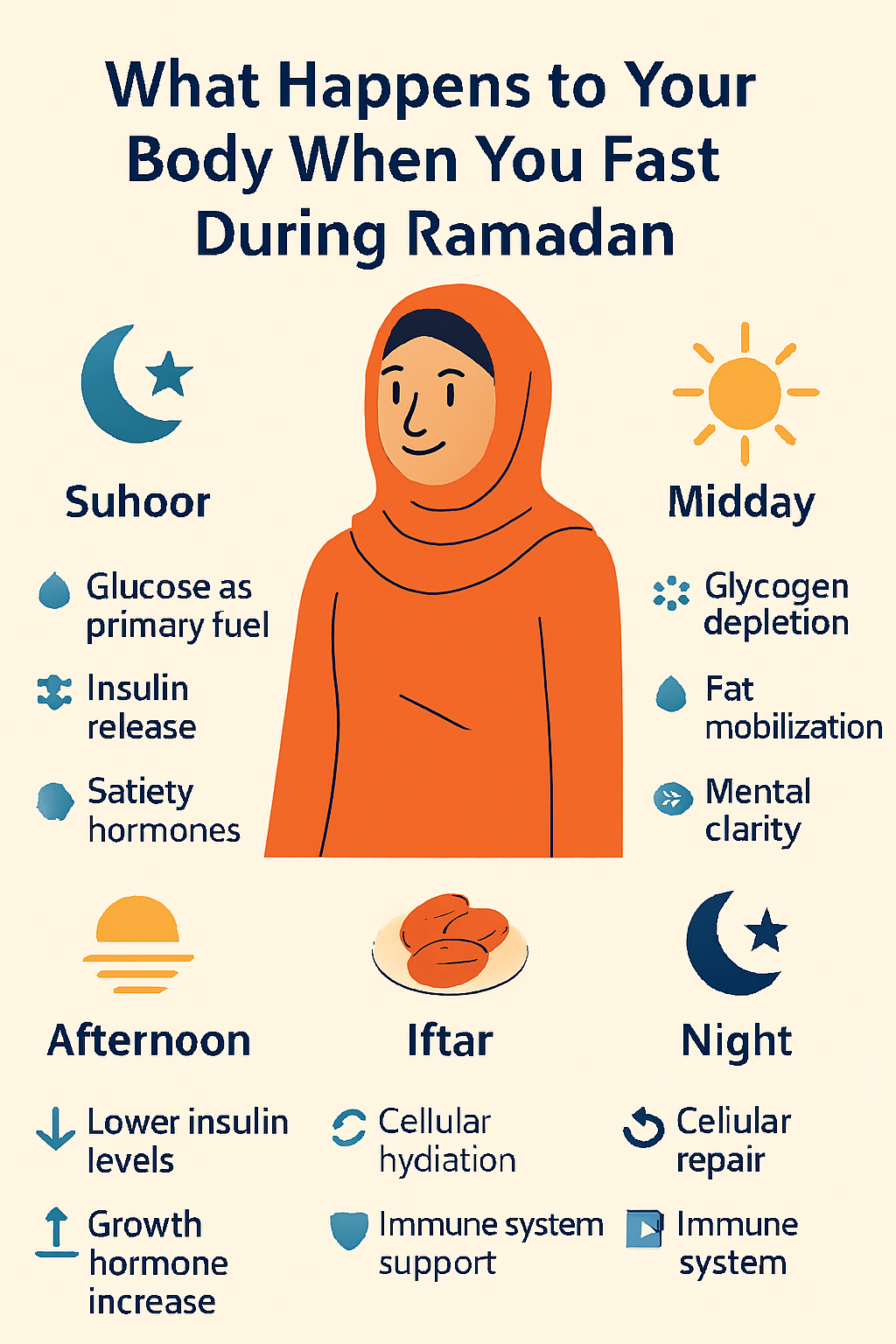
Fasting during Ramadan is an important spiritual practice that millions of Muslims around the world follow. From dawn, which is called Suhoor to sunset, which is called Iftar people do not. Drink anything and they do not take care of their physical needs. Instead they focus on praying, thinking about their actions and being with their community.. Fasting during Ramadan also does a lot of interesting things to your body. It affects how your body uses energy, how your hormones work, how you digest food and how clearly you think. These changes can be hard to deal with. They can also be good for you.
Lets look at what happens to your body on a day when you are fasting during Ramadan. And how these effects add up over the month.
Suhoor: Getting Ready for the Fast
The meal you eat before dawn which is called Suhoor is really important for getting your body ready for the day.
The carbohydrates you eat during Suhoor are broken down into glucose, which is stored in your liver and muscles. This glucose is what gives your body energy for the few hours of fasting.
When you eat your body releases insulin, which’s a hormone that helps your cells use glucose. As you start fasting your insulin levels go down. Your body starts using the energy it has stored.
The food you eat at Suhoor also affects the hormones that control how hungry or full you feel. If you eat food that has a lot of protein and fiber it can help you feel full for longer and give you energy.
Midday: Your Body Starts to Change
After you have been fasting for a hours your body starts to use fat for energy instead of glucose.
At first your body uses the glucose it stored from the food you ate at Suhoor.. When that glucose is all gone your body starts to break down fat to use for energy. This can help your brain work better. Give you more energy.
Many people say that they can think clearly and feel more calm when they are fasting. This is because their body is using fat for energy, which’s a more efficient way of making energy.
This change in how your body uses energy is one of the things about fasting. It helps your body burn fat and use sugar.
Afternoon: Your Body Gets Used to Fasting
By the afternoon your body has gotten used to fasting and your hormones have changed.
Your insulin levels are lower which is good for your blood sugar levels and can help prevent diabetes.
Your body also starts to release more of a hormone called human growth hormone, which helps your body use fat for energy and build muscle.
Fasting can also help reduce inflammation in your body, which can help with pain and heart health.
Even though you might feel hungry in the afternoon many people who fast say that they feel more calm and focused on their practice.
Iftar: Eating Again and Recovering
When the sun sets you can finally eat again which is called Iftar. This is a time of relief and spiritual gratitude.
It’s really important to drink water and eat food that has a lot of water in it like fruit to help your body get the fluids it needs.
Your body can absorb the nutrients it needs from the food you eat which helps give you energy and support your recovery.
Your hormones also go back to normal which helps your body feel full and satisfied.
Traditionally people eat dates to help raise their blood sugar levels. Eating meals with lean protein, vegetables and whole grains can help you have more energy and prevent feeling tired after Iftar.
Night: Your Body Repairs Itself
After Iftar and evening prayers your body keeps working to process the food you ate and repair itself.
Fasting can help your body get rid of damaged cells and recycle them which can help you stay healthy and live longer.
Fasting can also help your system by stimulating the production of new immune cells.
Getting sleep is also really important for your body to recover, especially during Ramadan when your sleep schedule might be different.
Weekly and Monthly Effects
Fasting every day for 29 or 30 days during Ramadan can have an impact on your body.
The first week can be hard. You might feel hungry and tired.
As the days go by your body starts to get used to fasting and you might feel more energy and more focused.
By the end of the month your body has gone through a lot of changes. You might feel renewed and stronger.
Health Benefits of Ramadan Fasting
Fasting during Ramadan can be really good for your body and mind if you do it in a way.
You might lose weight because you are eating calories and burning more fat.
Your blood sugar levels might get better. You might be less likely to get diabetes.
Fasting can also be good for your heart health. Can help you think more clearly.
It can also help you feel more emotionally strong and more connected to your faith.
Challenges and Tips for a Healthy Fast
While fasting during Ramadan can be good for you it can also be hard.
You might get dehydrated if you do not drink water so make sure to drink a lot during the hours when you are not fasting.
You might also eat much unhealthy food when you break your fast so try to eat balanced meals and not overeat.
Getting sleep is also really important so try to get some rest and take naps if you need to.
If you have problems with your system try to eat slowly and not eat too much at one time.
Planning your meals drinking water and listening to your body are all important for having a healthy and fulfilling Ramadan.
A Holistic Transformation
Fasting during Ramadan is a journey that affects both your body and your spirit. Each day your body goes through a lot of changes and over the month these changes can add up to make you healthier more focused and more spiritually strong. Ramadan is not just about not eating. It’s, about being disciplined, grateful and open to change. If you understand what happens to your body when you fast you can approach the month with intention, care and respect.
contact us more https://meeqam.com/contct us/