By the year 2026 global supply chains will be deeply digitized. They will rely on cloud platforms and Internet of Things sensors and artificial intelligence logistics and blockchain tracking. This digital transformation will improve efficiency. However it will also expose supply chains to cyberattacks. If a suppliers system is breached it can affect industries. This can disrupt production and finance and even national security.
- Why Digital Supply Chain Security Matters
Global supply chains are connected. Companies work with thousands of suppliers from over the world.
Critical infrastructure like energy and healthcare and defense depend on supply chains.
If there is a cyberattack it can stop production. Cause big losses.
Customers want to know what is happening. They want things to keep working.
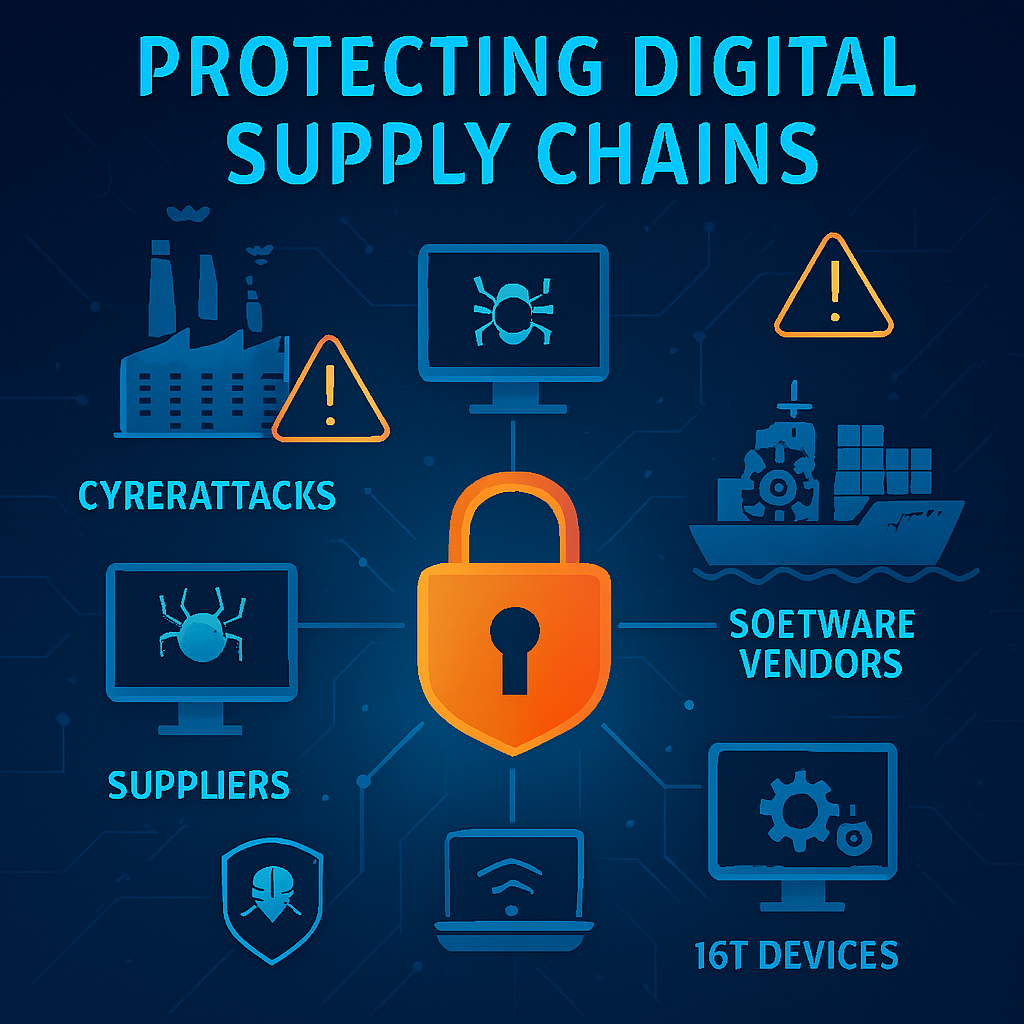
- Common Threats
Hackers can attack supply chains. They can compromise software updates or vendor systems.
Ransomware is a threat. It targets logistics and shipping companies.
Internet of Things exploits are a problem. Hackers can hijack sensors in warehouses or transport.
Data theft is a risk. Hackers can steal trade secrets or customer data.
Some countries try to infiltrate supply chains for advantage.
- Defensive Strategies
Zero Trust Architecture is an idea. It means verification across suppliers.
Blockchain tracking is useful. It ensures transparency and authenticity of goods.
Artificial intelligence monitoring is helpful. It detects anomalies in logistics and vendor systems.
Vendor vetting is important. It means having cybersecurity standards for suppliers.
Incident response plans are necessary. They help with recovery protocols for disruptions.
- Emerging Trends in 2026
Quantum- encryption will protect supply chain communications.
Digital twins will simulate supply chains to test resilience.
Collaborative threat intelligence will share data across industries.
Cyber insurance will evolve. It will have policies tailored for supply chain risks.
Government regulation will mandate secure supply chain practices.
- Case Study: Automotive Industry
Car manufacturers work with thousands of suppliers. In 2026 ransomware can target a chip supplier and halt global production.
By using blockchain tracking and artificial intelligence monitoring automakers can reduce risks. Maintain resilience.
Digital supply chains are very important for economies. By 2026 securing supply chains will require advanced technology and strong governance and global cooperation.
Zero Trust and blockchain and artificial intelligence monitoring are essential to protect industries and ensure stability in a world, with cyber threats.
Digital supply chains need to be protected. This requires a lot of effort and cooperation from everyone involved in supply chains.
contact us more https://meeqam.com/contct us/