When we think about logistics we think about getting things from one place to another and without spending too much money.. That is not enough anymore. Because of climate change people are more aware of what’s happening and governments are putting on more pressure sustainability is now a big part of logistics. Green logistics, which means using eco- practices in supply chains is changing how companies work and compete around the world.
Key Sustainability Practices
Green logistics is about doing things that are good for the environment. Some of these things include:
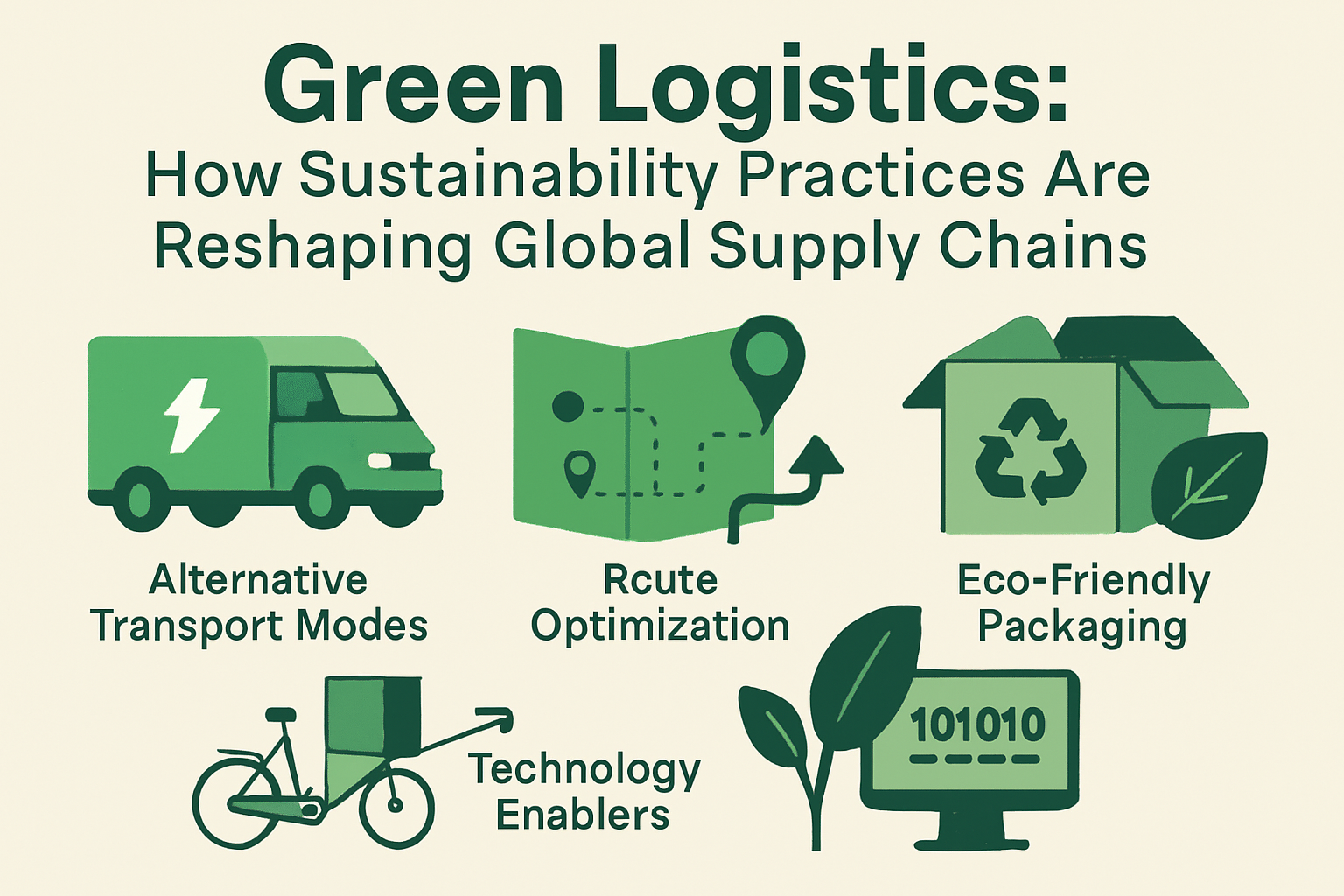
- Alternative Transport Modes: Using trucks, cargo bikes and vehicles that run on hydrogen or biofuels instead of diesel trucks.
- Route Optimization: Using computer programs to plan the routes so we do not waste fuel and drive empty miles.
- Eco-Friendly Packaging: Using packaging that can be recycled is biodegradable. Can be used again to reduce waste.
- Reverse Logistics: Having systems in place to recycle, fix and reuse products so they do not end up in landfills.
These practices help reduce the things we put into the air and also make customers happy because they want companies to be sustainable.
Technology Enablers
Technology is very important for logistics. Without it we would not be able to reach our sustainability goals.
- AI and Big Data: Help us predict what people will want manage our inventory and not send shipments.
- IoT Sensors: Help us keep an eye on how energy we are using how our vehicles are performing and what is happening to our cargo in real time.
- Blockchain: Helps us be transparent about our carbon footprint and makes sure everyone in the supply chain is accountable.
All these technologies help logistics companies measure, manage and reduce their impact on the environment.
Benefits of Green Logistics
Being sustainable is not about following the rules. It has real benefits:
- Environmental Impact: Reduces the bad things we put into the air and helps us reach our global climate goals.
- Cost Savings: Helps us use energy and plan our routes better which saves us money on fuel.
- Brand Reputation: Makes customers happy and loyal. Also attracts investors who care about the environment.
- Resilience: Helps us be better prepared for things like fuel shortages or changes in regulations.
Companies that use logistics get ahead of the competition in a market that is more and more focused on sustainability.
Challenges
Even though green logistics has advantages it also has some challenges:
- High Upfront Investment: We need to spend a lot of money on electric fleets, renewable energy and new technologies.
- Infrastructure Gaps: We do not have charging stations, renewable energy grids and recycling facilities yet.
- Balancing Speed and Sustainability: Customers want their things fast. That can be hard to do in a sustainable way.
To overcome these challenges we need to work governments, businesses and customers.
Case Studies
Some companies are already showing us how green logistics works:
- DHL GoGreen Program: DHL wants to have zero-emissions logistics by 2050 so they are investing in vehicles and carbon-neutral shipping.
- Maersk: This big shipping company is investing in vessels that run on methanol and do not make any carbon emissions to make ocean freight more sustainable.
- Retailers: Companies like IKEA and Walmart are using packaging and giving customers options for eco-friendly delivery.
These examples show us that sustainability is not an idea. It is already changing logistics around the world.
Future Outlook
The future of logistics will be about sustainability. Some of the trends include:
- Carbon-Neutral Supply Chains: Companies will promise to not make any carbon emissions.
- Renewable Energy Integration: Warehouses and logistics hubs will use solar, wind and other renewable energy sources.
- Regulatory Pressure: Governments will make rules about emissions, which will make companies adopt green practices faster.
As sustainability becomes the norm companies that do not adapt will be left behind.
Green logistics is not something we can choose to do or not do anymore. It is becoming the standard. By using eco- practices taking advantage of technology and being innovative companies can reduce their impact on the environment while also being more efficient and competitive.
The logistics industry is at a turning point. Companies that invest in sustainability now will not meet the rules but also build supply chains that are strong and ready, for the future. In the ten years green logistics will decide which companies win and which companies lose in global commerce.
contact us more https://meeqam.com/contct us/