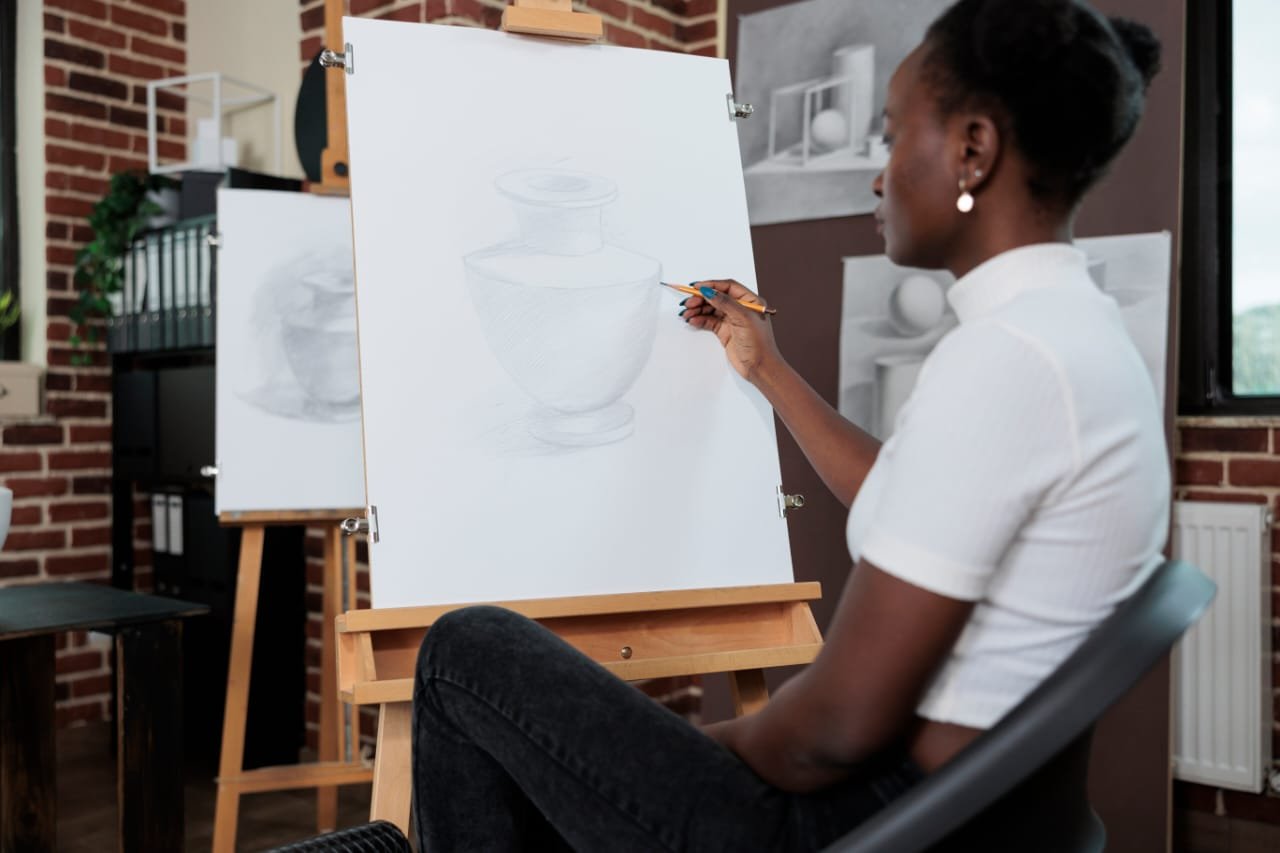
To draw is one of the oldest and most powerful ways humans express ideas. Before painting, sculpture, or digital art, people learned to draw simple lines to represent what they saw and felt. Today, anyone can learn to draw it is not a rare talent, but a skill built through practice, observation, and patience. When you learn to draw, you are training your eyes and mind to see the world more clearly.
What Does It Mean to Draw?
When you draw, you create marks that represent something real or imagined. But to truly draw well, you must go beyond simple lines. You need to observe edges, spaces, proportions, light, and shadow. A pencil is just a tool the real ability to draw comes from how well you see and understand your subject. Many beginners struggle because they try to draw from memory instead of observation. Learning to draw means focusing on what is actually in front of you, not what you think it looks like.
Five Essential Skills to Learn to Draw
To improve your ability to draw, you need to build five core skills:
- Draw edges: Focus on where objects begin and end.
- Draw spaces: Pay attention to the gaps between objects.
- Draw relationships: Compare sizes, angles, and distances.
- Draw light and shadow: Use shading to create depth.
- Draw the whole: Combine all elements into one complete image.
Each time you draw, these skills help you create more accurate and realistic results.
Tools You Need to Start to Draw
You don’t need expensive materials to draw. A simple pencil and paper are enough. Still, understanding your tools will improve how you draw:
- Graphite pencils range from light (H) to dark (B).
- Erasers can be used to create highlights, not just fix mistakes.
- Paper texture changes how your lines appear when you draw.
With just these basic tools, you can begin to draw effectively.
Step by Step Process to Draw Better
Every time you draw, follow a simple process:
- Start with a loose sketch to plan your drawing.
- Build basic shapes to structure your subject.
- Refine edges to define forms.
- Add shading to show light and depth.
- Finish with details to complete the drawing.
Following these steps will help you draw with more confidence and control.
Common Problems When Learning to Draw
Many people feel frustrated when they learn to draw, but these challenges are normal:
- Fear of making mistakes can stop you from starting.
- Stiff lines happen when your hand is too tense.
- Flat drawings occur when you ignore shading.
- Poor proportions happen when you don’t measure carefully.
The solution is simple: keep practicing. The more you draw, the better you understand what works.
Daily Practice to Improve How You Draw
Consistency is key if you want to improve how you draw. Try this weekly plan:
- Monday: Draw something you see in real life.
- Tuesday: Draw from memory.
- Wednesday: Make quick sketches.
- Thursday: Spend time on one detailed drawing.
- Friday: Draw something difficult.
- Saturday: Draw for fun.
- Sunday: Rest and study other artists.
By practicing regularly, your ability to draw will steadily improve.
Why Learning to Draw Matters
To draw is more than making pictures. When you learn to draw, you learn to see details, understand structure, and think visually. Drawing also helps you express ideas and emotions in a unique way. Every time you draw, you make decisions, learn from mistakes, and improve your skills.
Start to Draw Today
The best way to learn to draw is to begin right now. Take a pencil, find some paper, and start to draw anything around you. Don’t worry about perfection. The more you draw, the more confident and skilled you will become
.How To Convert PDF to Word In 2026